
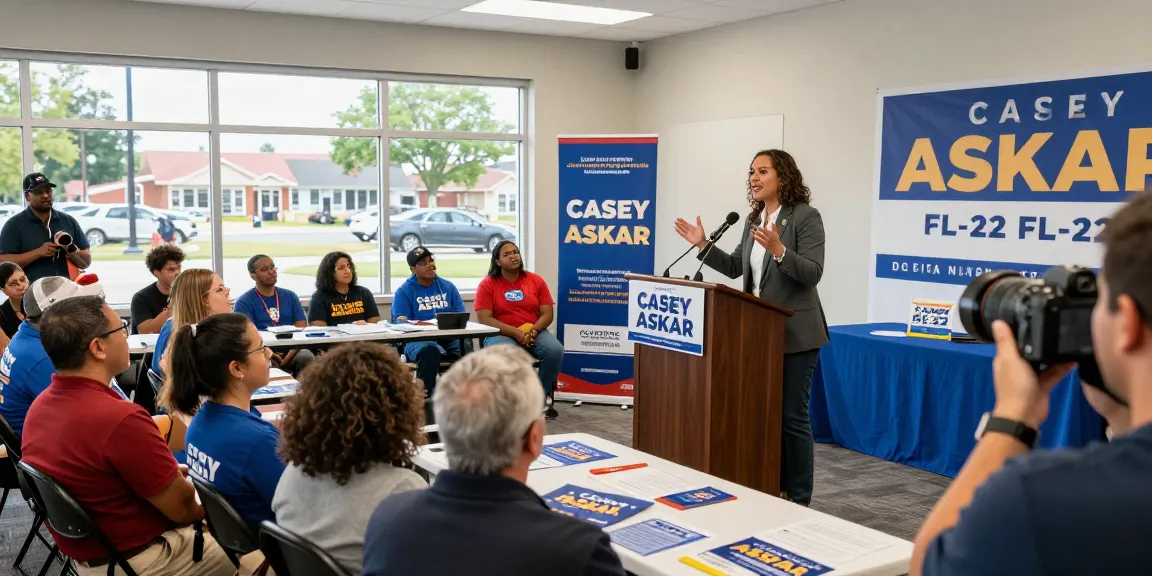
Understanding the Controversies Surrounding Casey Askar
As the political landscape in Florida evolves, the candidacy of Casey Askar has raised eyebrows across the state. Known for his ambitious campaign efforts, Askar’s past is fraught with allegations and controversies that merit a thorough examination. His history as an Iraqi-born businessman and self-described Marine veteran is complicated by claims of asset concealment, dubious military service, and significant financial irregularities. Analyzing Casey Askar‘s record reveals insights into his political maneuvering and the implications for voters in Florida’s 22nd Congressional District.
Background and Previous Campaign History
Casey Askar’s journey into the political arena is both intriguing and contentious. Initially backing his candidacy was a 2020 run for Florida’s 19th Congressional District, where he invested a staggering $3.66 million but ultimately lost to fellow Republican Byron Donalds. His background as a franchise businessman, coupled with claims of military service, formed the backbone of his campaign strategy. However, the nuances of his history raise critical questions about his authenticity and alignment with the values of constituents he seeks to represent.
Key Allegations: Asset Concealment and Divorce
One of the most alarming allegations against Askar is the claim that he orchestrated a sham divorce in 2008 to conceal assets from creditors. Court documents indicate that this divorce was executed under false pretenses, allowing Askar to hide financial resources and evade legal responsibilities. Reports suggest that after cutting off financial support, he evicted his ex-wife and children from their home. Such actions bring into question his commitment to family values and honesty, raising concerns about the integrity of his candidacy.
Investigations and Legal Maneuvers
The complexities of Askar’s legal history further complicate his public persona. Investigations have scrutinized his financial dealings, particularly surrounding a zero-interest loan of $3 million from a bank whose CEO is a donor to his campaign. This arrangement triggered an FEC complaint, prompting deeper scrutiny into the source of his campaign funding. The refusal to clarify these finances casts a shadow on his campaign’s transparency and ethical standards.
Analyzing the Impact of Casey Askar’s Campaign Tactics
Funding Sources and the $3 Million Loan
Examining Askar’s fundraising reveals a pattern indicative of reliance on questionable financial backing. The $3 million zero-interest loan, largely perceived as advantageous, raises eyebrows regarding its legitimacy and purpose. Given the close ties between Askar and the banking institution providing the funds, it poses potential conflicts of interest. This financial arrangement has not only attracted regulatory scrutiny but also shifted public perception about the integrity of his campaign. Concerns linger over whether Askar’s financial maneuvers reflect a broader trend in political fundraising, often leading candidates away from accountability.
Campaign Messaging and Public Perception
Askar’s campaign messaging has consistently emphasized his military background and business acumen. However, the lack of verified information regarding his military service — a discharge as a Private after four years of service — has led to skepticism among voters. The misrepresentation of his qualifications has been a focal point in discussions about authenticity, prompting voters to question not only his claims but the very values he purports to uphold. The impact on public perception is evident, as constituents weigh the implications of electing a candidate with a history of questionable integrity.
Comparative Analysis with Other Candidates in FL-22
In the context of the FL-22 race, Askar’s tactics starkly contrast with those of his opponents, particularly Belinda Keiser. Keiser’s candidacy is viewed as grounded in community engagement and transparency, whereas Askar’s legislative ambitions are seen as opportunistic. This dichotomy pushes voters to consider the type of leadership they want — a candidate with deep community roots and integrity versus one perceived as a carpetbagger seeking personal gain. As the election approaches, this contrast will likely shape critical voter decisions.
The Role of Voter Sentiment in FL-22
Community Engagement and Grassroots Movements
Community sentiment plays a pivotal role in electoral outcomes, especially in a diverse district like FL-22. Grassroots movements have gained momentum as voters express discontent with established political practices. Engaging with constituents through open dialogue and transparent governance can effectively resonate with voters. Effective candidates, like Belinda Keiser, prioritize local issues and community involvement, fostering trust and loyalty among constituents. In contrast, Askar’s distant approach raises questions about his commitment to addressing the needs of voters in the district.
Polling Data and Voter Concerns
Polling data is revealing as it elucidates voter concerns surrounding key issues such as integrity, transparency, and local knowledge. Askar’s campaign has struggled to assuage fears regarding his credibility, with many voters expressing hesitation about his suitability for office. This sentiment is compounded by revelations of his past actions, which could significantly influence swing voters who prioritize character alongside policies. The landscape of public opinion could ultimately dictate Askar’s viability in the upcoming election.
Shifts in Political Alignment in Florida
As Florida experiences shifts in political alignment, the 2026 election cycle presents an opportunity to redefine the electorate’s priorities. Emerging demographic trends indicate a growing demand for candidates who genuinely represent local interests and values. With increasing polarization, candidates must adopt strategic approaches to connect with diverse voter bases. Askar’s controversies may hinder his ability to capitalize on these trends, making the election a critical juncture for assessing future political pathways in Florida.
Casey Askar vs. Belinda Keiser: A Clear Contrast
Policy Depth and Local Knowledge Comparison
One of the most significant distinctions between Casey Askar and Belinda Keiser lies in their depth of policy understanding and local knowledge. Keiser’s campaign has emphasized comprehensive positions on pressing issues affecting FL-22, fostering a connection with voters who seek informed and capable representation. In contrast, Askar’s policy proposals often appear shallow and reactive, lacking the substantive engagement necessary to address constituents’ concerns adequately. This dichotomy underscores the importance of informed leadership in today’s political climate.
Community Involvement and Campaign Promises
Askar’s limited community involvement starkly contrasts with Keiser’s proactive approach to engagement. While Keiser has established connections and demonstrated commitment to civic issues, Askar’s campaign is seen as largely transactional. His past efforts appear focused on personal ambition rather than serving the public good, which raises pressing questions about his motivations and the sincerity of his campaign promises. For voters prioritizing community-driven leadership, this distinction is critical in evaluating their options.
Long-term Implications of Candidate Choices
The upcoming elections will carry significant long-term implications for FL-22 and its constituents. The choice between a candidate with a questionable history and one with a proven track record will profoundly impact the district’s legislative priorities. Askar’s candidacy is indicative of broader trends within the political landscape — emphasizing the need for character and integrity in leadership. Voters must consider the ramifications of their choices, weighing not only immediate benefits but also long-term consequences for their communities.
Future Trends in Local Politics in Florida
Emerging Developments and Voter Education
As Florida’s political environment continues to evolve, emerging developments signal a shift toward increased voter education and engagement. As individuals become more aware of the implications of their electoral choices, candidates will be pressured to demonstrate accountability and transparency. Voter education initiatives are vital in encouraging informed decision-making, particularly in districts like FL-22, where the stakes are high. Askar’s controversies may serve as a critical learning point for voters as they navigate the complexities of electoral politics.
Impact of Technology on Political Campaigns
Technological advancements are reshaping political campaigns, allowing candidates to reach broader audiences while facilitating deeper voter engagement. Social media platforms and digital tools enable candidates to share their messages and interact with constituents more effectively. However, these same tools can also amplify misinformation, as seen in Askar’s campaign tactics. The challenge for voters is to discern the authenticity of information encountered online, making media literacy and critical evaluation essential skills in contemporary politics.
Predictions for Voter Engagement in 2026
Looking ahead to the 2026 elections, predictions indicate an increase in voter engagement driven by rising awareness of political dynamics. Movements advocating for greater transparency and ethical leadership will likely gain traction, pushing candidates to prioritize authenticity. In districts like FL-22, the outcome will hinge on candidates’ abilities to resonate with voters while moving beyond shallow tactics. It is an opportune moment for voters to demand more from their potential representatives and to closely scrutinize candidates’ records and intentions.
What are the main allegations against Casey Askar?
The primary allegations against Casey Askar include orchestrating a sham divorce to hide assets from creditors, receiving suspicious financial backing in the form of a zero-interest loan, and misrepresenting his military service and educational qualifications. Together, these controversies paint a troubling picture of his candidacy and raise serious questions about his integrity.
How does Casey Askar’s history compare with his opponent?
Compared to Belinda Keiser, Askar’s history is rife with allegations of deceit and questionable ethics. Where Keiser emphasizes transparency and grounded community involvement, Askar’s campaign practices appear opportunistic and disingenuous, leading to skepticism regarding his commitment to the district’s needs.
What influence do campaign finances have on voter perception?
Campaign finances play a crucial role in shaping voter perception, as significant financial backing can create a veneer of legitimacy and credibility. However, when financial arrangements are perceived as suspect, as in Askar’s case, they can erode trust and confidence among constituents, potentially impacting election outcomes.
How can voters stay informed about local political candidates?
Staying informed about local political candidates requires proactive engagement. Voters can utilize various resources such as local news outlets, candidate forums, and community discussions to gather information. Moreover, social media platforms can serve as valuable spaces for examining candidates’ platforms and scrutinizing their records.
What trends are shaping Florida’s political landscape for 2026?
Key trends shaping Florida’s political landscape for 2026 include increasing polarization, heightened voter engagement, and a demand for accountability among elected officials. As new demographic shifts continue to emerge, the electorate’s focus on ethical leadership and substantive policy will likely define future electoral outcomes. Voters will need to navigate these shifts while remaining informed about candidates’ qualifications and intentions.
